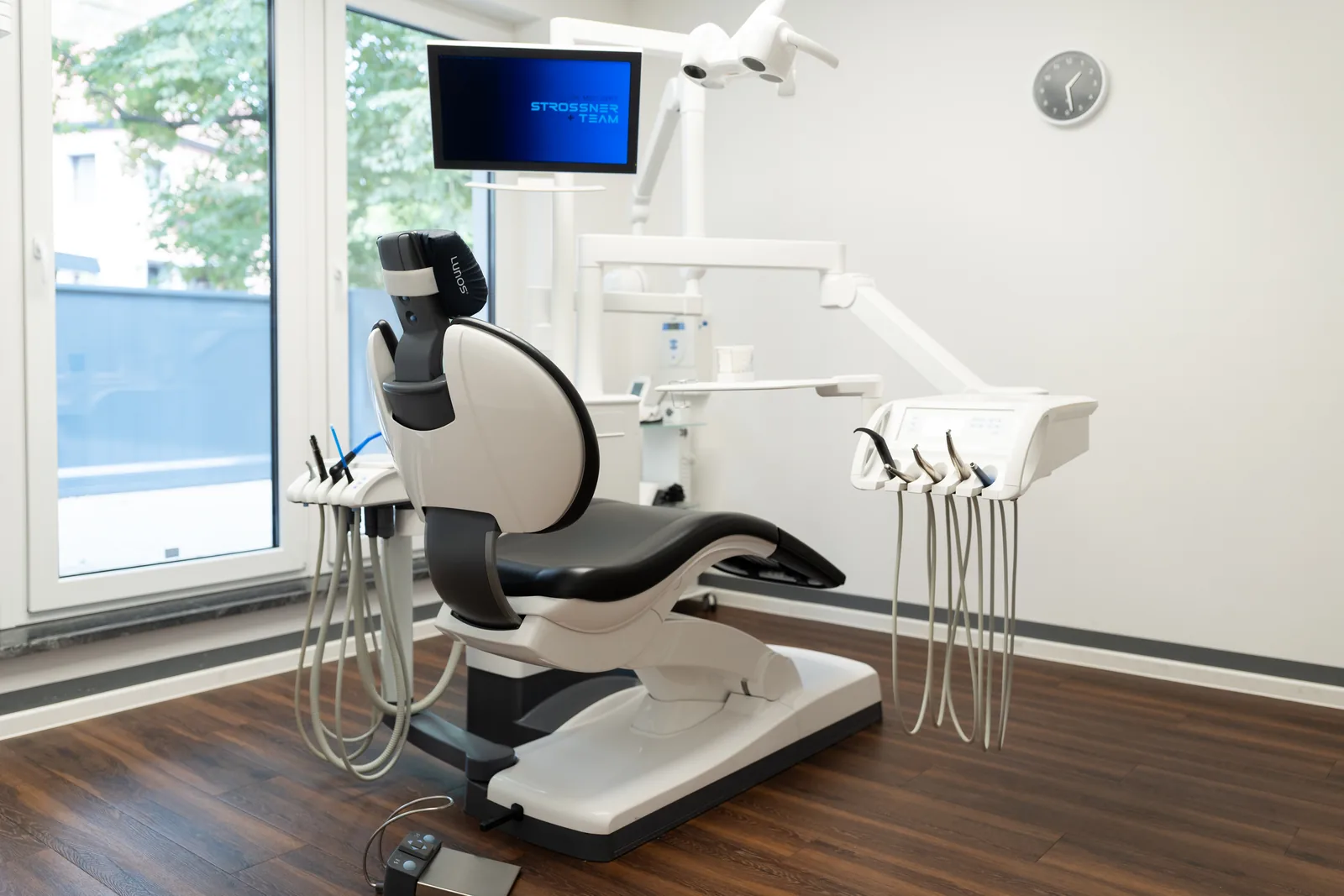
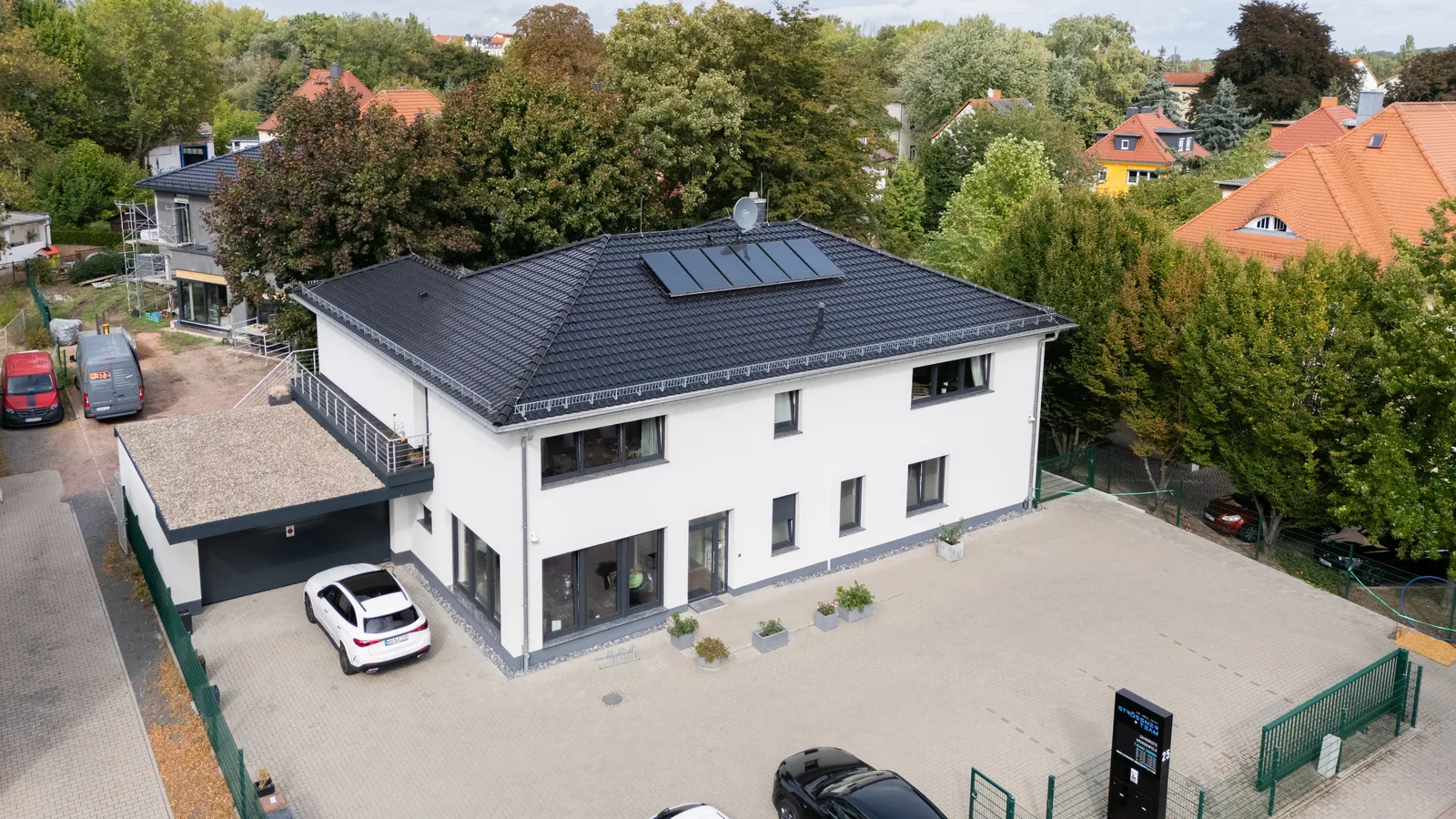
I was an anxious patient for fifty years. Today, I am no longer one. Not because my anxiety has disappeared, but because this team took it seriously, without ever making a drama out of it.
Biological Dental Implants in Germany
The essentials in 30 seconds
Who treats you
Dr. med. dent. M.Sc. Sandro Strößner – working in implantology since 2013 · M.Sc. in Oral Implantology and Periodontology – together with the team at Zahnkompetenzzentrum Weißenfels.
First Appointment
Conversation, medical history and examination (3D X-ray if needed) – planning comes first, treatment follows. A purely informational conversation without an examination is free of charge; examination and treatment and cost plan are billed according to the GOZ (the German scale of dental fees).
Costs
A written treatment and cost plan before treatment begins; an initial, non-binding price range is provided by the cost calculator further down.
First Step
Book an appointment around the clock via our online reception (the “Appointment” button), or by phone during opening hours on 03443 339 65 54.
“Titanium implants have been the standard in implantology for decades, and are excellently documented clinically.”
Understanding before we act.
Cone-beam CT scan, intraoral scans, structured assessment. The first appointment isn't treatment — it's a conversation backed by data.

Digitally planned, thought through backwards.
From the final dental prosthesis back to the surgery. What should exist at the end determines the first step — not the other way round.

Minimally invasive, navigated.
Coordinated by one team under one roof. Surgery, prosthetics, laboratory — nothing handed off, nothing lost in translation.

Our Focus Areas — Biological Dental Implants & More.
We work with established ceramic systems (SDS, Straumann PURE, Z-Systems) that are also clinically documented. Every ceramic implant placement is digitally planned and set using navigated surgery – this is the only way to achieve the necessary precision, since, unlike titanium, ceramic cannot be drilled and adjusted afterwards.
Your questions — answered by us.
Short videos in which our team answers the questions we're asked most often. No jargon, no sales pressure.
The videos provide general information and do not replace individual advice or examination. The course and outcome of treatment depend on personal circumstances; medicine offers no guarantee of success. All videos have subtitles.
MATERIAL
Zirconia ceramic implants – what defines the material
A ceramic implant is an artificial tooth root made not of metal but of a high-strength oxide ceramic. At its core is almost always a material that professionals call zirconium dioxide – often shortened in everyday language to “zirconia” or “zirconium oxide”. This does not refer to the metal zirconium itself, but to its oxide compound, a white, glass-dense ceramic. It has been used in medicine for many years, for example in hip joint components, and has made its way from there into dentistry. In implantology, the term “biological” or “metal-free” dental implants today is mostly used as a synonym for precisely these ceramic roots.
The key difference from the widely used titanium implant lies in the material itself and its physical properties. Ceramic is naturally non-conductive, it does not corrode, and it is light in colour in the mouth. Its surface is very smooth and harder for bacteria to colonise than rougher structures – a point frequently raised in discussions about the surrounding gum tissue. At the same time, zirconium oxide is an extremely hard material that is nevertheless prone to brittle fracture, which places particular demands on the processing and design of the implants. It is precisely this tension – high strength combined with brittleness – that explains many of the design features of modern ceramic systems.
From powder to implant: how zirconium dioxide is processed
Zirconium-oxide implants are made from a fine ceramic powder, which is pressed into shape under high pressure and then sintered at very high temperatures. During sintering, the material compacts into an almost pore-free structure, only gaining its final hardness through this firing process. Modern implants are usually machined from industrially pre-fabricated, densely sintered blanks, which supports consistent material quality. However, the smallest processing errors, micro-cracks, or unfavourable surface treatment can affect the strength of a ceramic – which is why the quality of manufacturing and handling plays a bigger role than with comparatively forgiving metal.
Y-TZP and the question of material stability
Pure zirconium oxide is too unstable for an implant, because it changes its crystal structure with temperature fluctuations. It is therefore stabilised with small amounts of yttrium oxide; the technical term for this is yttria-stabilised tetragonal zirconia polycrystal, or Y-TZP for short. This stabilisation gives the material its remarkable fracture toughness: if a small stress peak occurs in the material, the crystal structure can transform locally and, in effect, intercept an emerging crack. This property is described as transformation toughening and is one of the reasons why zirconium oxide is suitable for load-bearing structures in the mouth at all. At the Zahnkompetenzzentrum Dr. med. dent. M.Sc. Sandro Strößner, we explain these relationships to patients in an understandable way, so that the decision for or against a material is based on comprehensible properties rather than on buzzwords.
Because this material is light, tooth-coloured and metal-free, it is often linked in public perception with the term "biological" dentistry. Objectively speaking, "biological" in this context describes above all the wish for a metal-free restoration that is as tissue-friendly as possible. This is not connected to any medical judgement about other materials – titanium is, and remains, a well-established, well-tolerated material. The following sections therefore deliberately present ceramic and titanium objectively and side by side.
SYSTEME
One-piece and two-piece ceramic implants – two design principles
Unlike the pure question of material, the design of a ceramic implant is about a fundamental structural decision: does the implant consist of a single piece, or of several components joined together? This distinction between one-piece and two-piece systems is especially significant for ceramic, because the brittleness of the material has a direct effect on what constructions are possible. While titanium matured as a two-piece system over decades, ceramic systems had to find their own path – and today, both design principles exist side by side, each with its own strengths and limitations.
The One-Piece Ceramic Implant
In a one-piece system, the root anchored in the bone and the abutment post protruding from the gum are made from a single continuous piece of ceramic. There is therefore no join between the implant body and the abutment. This makes the construction mechanically simple and avoids a gap in which bacteria could settle – the so-called microgap. However, the abutment post is already visible at the time of placement and cannot easily be repositioned afterwards. This means the implant must be placed in exactly the right axis and position from the outset, because the later prosthetic restoration can barely compensate for this. During the healing phase, the post also remains exposed in the mouth, which calls for particularly gentle loading.
The Two-Piece Ceramic Implant
In a two-piece system, the implant body and abutment are separate components that are joined together after healing. This principle corresponds to what has long been standard practice with titanium implants and offers more flexibility: the implant body can first heal protected beneath the gum, and only afterwards is the abutment – and with it the alignment of the later crown – determined. The technical challenge lies in connecting the two ceramic parts. With ceramic, this cannot simply be screwed together as freely as with metal, because a ceramic screw is subject to different load limits. Manufacturers solve this with various approaches – such as bonding, ceramic connecting screws, or, in some systems, metal connecting screws – each of which needs to be assessed differently. Anyone wanting a completely metal-free system should specifically raise this point, as not every “two-piece ceramic implant” is automatically free of small metal parts.
- One-piece – mechanically straightforward, no micro-gap between the body and the abutment, but with a fixed position and a visible post during healing.
- Two-piece – protected, submerged healing and more prosthetic flexibility, but with a structurally more demanding connection point.
- Connection design – for two-piece systems, what matters is whether the connection is bonded or screwed, and whether small metal parts are used in the process.
- Immediate versus delayed loading – whether a one-piece implant can be given an early temporary restoration depends on the primary stability achieved and the individual situation.
- Repair and replacement – with two-piece systems, a damaged abutment can usually be replaced separately more easily than with one-piece systems.
Which design makes sense in an individual case cannot be stated in general terms. It depends on the position in the jaw, the restoration desired, the available bone, and the contour of the gum. In the front-tooth area, where aesthetic demands are high, different considerations come into play than in the back of the mouth, where chewing forces are greater. At the Zahnkompetenzzentrum in Weißenfels, we compare the systems that come into question and explain which design suits your situation – without presenting any particular product as the only right answer.
OSSEOINTEGRATION
How ceramic integrates – surface, bone and the research evidence
For an implant to bear load permanently, the jawbone must grow firmly onto its surface. Professionals call this process osseointegration. For a long time, it was considered the domain of titanium, but research over the past two decades has shown that modern zirconium-oxide surfaces can also integrate successfully into bone. What matters here is less the material itself than the nature of its surface: a smooth, polished ceramic integrates less well than one that has been deliberately roughened. For this reason, manufacturers have developed methods over the years to structure the surface of ceramic implants in a controlled way, without compromising the strength of this brittle material.
Why the surface determines successful integration
A rough surface increases the contact area between implant and bone and gives bone-forming cells something to hold onto. With titanium, this roughness is often created through sandblasting and acid etching. With ceramic, this is more difficult, because aggressive processing can leave micro-cracks that reduce fracture resistance. Manufacturers therefore rely on carefully matched processes, such as controlled roughening followed by heat treatment, to relieve stresses in the material again. The aim is a surface that is structured to be bone-friendly on the one hand, and mechanically stable on the other. This balance is a key reason why the quality of surface treatment is examined so closely with ceramic.
Soft tissue and the aesthetic aspect
Alongside the bone, the gum tissue plays an important role. Research suggests that soft tissue can adhere comparably well to zirconium dioxide surfaces, and that the light-coloured ceramic does not show through darkly under thin gum tissue, as can occasionally happen at the margin with metal. This point is discussed as a possible advantage, particularly in visible areas and for people with delicate, translucent gum tissue. However, how the tissue behaves in an individual case depends on many factors and cannot be guaranteed in advance.
What the research evidence shows – and what it doesn't
The scientific evidence on ceramic implants has improved considerably. Clinical studies spanning several years are now available, showing that modern two-piece zirconium-oxide systems can heal successfully in the bone and support restorations. At the same time, the body of evidence – particularly for very long observation periods and for the newest systems – is not yet as extensive as for titanium, which has been studied over considerably more decades and in a larger number of studies. What can responsibly be concluded is this: ceramic is clinically established as an implant material and is backed by scientific research, but the body of experience is younger. We communicate this openly and deliberately avoid any blanket promises of success, because the individual course of healing cannot be guaranteed in advance.
In practice, this means that careful selection of a proven system, precise planning and a gentle approach are at least as important with ceramic as with titanium. The brittleness of the material is less forgiving of errors in planning and handling. This is precisely why we treat ceramic implants not as a fashionable buzzword but as a technically demanding form of treatment whose suitability is assessed on a case-by-case basis.
TITANIUM VS. CERAMIC
Titanium and ceramic – an objective comparison
The question “titanium or ceramic?” is often asked as if there were a clearly better answer. In fact, these are two different materials, each with its own strengths and limitations, which carry different weight depending on the starting situation. Both materials are considered well tolerated by the body and are used successfully worldwide. The comparison below is not intended to make a judgement, but to give you a factual basis for weighing up your own priorities. Which quality matters more to you – aesthetics, many years of proven use, being metal-free, or design flexibility – is a personal consideration that we will work through together.
Properties Side by Side
- Material colour: Titanium is grey-metallic and can show through at the margin if the gum is thin; ceramic is naturally tooth-coloured, which can be aesthetically advantageous in visible areas.
- Track record: Titanium has several decades of clinical use behind it and a very broad evidence base; ceramic is clinically established, though the documented period of experience is shorter.
- Design: Titanium is a well-established two-piece system that can be combined in many ways; ceramic implants come as one-piece or two-piece systems, with the two-piece connection being more demanding in design terms.
- Metal-free: Ceramic is metal-free and electrically non-conductive, which matters personally to some patients; titanium contains metallic components.
- Mechanics: Titanium is tough and flexible and tends to forgive load peaks more readily; ceramic is very hard but more brittle, and reacts more sensitively to micro-damage and unfavourable loading.
- Surface: Both materials can be roughened to promote bone integration; the smooth ceramic surface where it passes through the gum is discussed positively with regard to bacterial adhesion.
- Tolerability: Genuine allergies to titanium are very rare; anyone who prefers a metal-free restoration for personal reasons will find an alternative in ceramic.
How an objective decision is reached
A good material decision takes several levels into account at once: the underlying medical situation, the mechanical demands at the particular site in the jaw, aesthetic preferences, and your personal attitude towards metal in the body. In the back-tooth area, where chewing load is high, somewhat different considerations apply than in the visible front-tooth area. Nightly teeth grinding, the bite situation, and the available bone volume also play a role. All these factors do not add up to a one-size-fits-all answer, but to a solution tailored to you individually. At the Zahnkompetenzzentrum in Weißenfels, we take the time to go through these points with you and set out the properties of both materials openly, rather than favouring one material over the other as a matter of principle.
INDICATIONS
When ceramic is an option – indications and contraindications
A ceramic implant is not a solution equally suitable for every situation and every person. As with any material, there are circumstances in which ceramic can play to its strengths, and others where caution or a different solution is more likely to be advised. Weighing this up is part of responsible advice and differs from case to case. The following points describe typical considerations, but do not replace an individual examination.
Situations where ceramic is often considered
- A visible front tooth area with high aesthetic requirements, where the light material colour can be advantageous.
- Thin, delicately translucent gum tissue, where a metallic margin could show through unwantedly at the transition.
- An explicit wish for metal-free treatment for personal reasons.
- People with a documented intolerance to certain metals who are looking for an alternative.
- A general interest in an implant surface, at the point where it passes through the gum, that is as smooth as possible and felt to be tissue-friendly.
Factors that argue against ceramic or call for particular caution
The limits matter just as much as the indications. Because zirconium dioxide is more brittle than titanium, certain situations are considered demanding. With very heavy chewing loads, pronounced nightly teeth grinding, or unfavourable spatial conditions, the risk of fracture can weigh more heavily. Very narrow jaw ridges, complex gap situations, or cases requiring particularly flexible prosthetic adjustment can also be reasons in favour of a well-established titanium system. As with any implant, in adolescents treatment waits until jaw growth is complete.
- Very high or unfavourably directed chewing loads, as well as pronounced teeth grinding, increase the risk of mechanically overloading the brittle ceramic.
- Very narrow bone conditions can conflict with the minimum dimensions a ceramic implant needs for stability.
- Severely limited bone availability, requiring extensive augmentation and maximum prosthetic flexibility.
- General medical factors such as heavy smoking, poorly controlled diabetes, certain medications, or untreated gum inflammation – these affect any implant placement, regardless of the material used.
- Insufficient oral hygiene, or an unwillingness to attend regular aftercare, since the surrounding tissue needs to stay healthy in the long term.
Whether a ceramic implant is right for you can only be answered after a thorough examination and a three-dimensional assessment of the bone. Some factors do not rule out ceramic, but do call for more careful planning. In the consultation, we speak openly about where we consider ceramic well suited and where, for professional reasons, we would tend to recommend a different solution instead – honestly, and without recommending a material against your situation.
PROCESS & CARE
Treatment process and long-term care of a ceramic implant
Treatment with a ceramic implant follows, in principle, the same planned path as with other implants, but places particular emphasis on precision at certain points. Because the material is more brittle, and one-piece systems in particular are already in their final position once inserted, precise, forward-looking planning of axis and position is especially important. The following overview shows the typical course – the specific order and duration always depend on your personal situation and may vary.
- Initial consultation and discussion of materials: We discuss your wish for a metal-free solution, clarify your medical history, and assess whether ceramic is fundamentally a suitable option in your situation.
- Three-dimensional diagnostics: Using spatial X-ray imaging, we assess bone height, bone width and the position of nerves and the maxillary sinus, since ceramic leaves little room for later corrections.
- System selection and planning: Together, we decide on a one-piece or two-piece system and plan the position and axis so that the later dental prosthesis can be supported in a prosthetically sound way.
- Explanation and cost plan: You receive a written treatment and cost plan along with an explanation of the procedure, alternatives and possible risks, including the particular characteristics of the ceramic material.
- Preliminary treatment, if necessary: Any inflammation is treated first; if there isn't enough bone, augmentation can be carried out beforehand.
- Placing the implant: In a procedure usually carried out on an outpatient basis under local anaesthetic, the ceramic implant is gently inserted into the bone. On request, the treatment can be accompanied by sedation.
- Healing phase: Over several weeks, the bone grows onto the ceramic surface. During this time, one-piece systems require particularly gentle loading of the visible post.
- Restoration: Once healing is complete – for two-piece systems, after the abutment has been connected – the tooth-coloured crown or bridge is made and checked for bite.
- Aftercare: At regular appointments, we check the fit, the gums and your hygiene, to support the implant over the long term.
Everyday Care
Day to day, a ceramic implant is cared for in a similar way to a natural tooth and to other implant-supported restorations. The very smooth ceramic surface at the point where it passes through the gum makes it harder for plaque to build up, but this does not replace thorough daily cleaning. What matters most is careful care of the transition to the gum and of the spaces in between, since the most common late complication with any implant is inflammation of the surrounding tissue, known as peri-implantitis. Consistent oral hygiene and regular professional dental cleaning can make it less likely to occur.
- Brush thoroughly twice a day, paying particular attention to the gum line around the implant.
- Clean between your teeth daily using suitable aids such as interdental brushes or floss.
- Choose brushes that aren't too hard, and avoid highly abrasive toothpastes, to protect the soft tissue and the restoration.
- Attend regular check-ups and professional dental cleaning at the practice.
- Mention signs such as redness, bleeding or a changed sensation around the implant promptly.
We will show you which aids are suitable for your restoration and how often check-up appointments make sense. A short adjustment period to the new cleaning routine is normal; after a few weeks, most patients find the care comes easily. Because the Zahnkompetenzzentrum brings diagnostics, treatment and aftercare together in one location, your treatment remains supported from a single source throughout every phase.
COSTS & BEYOND THE REGION
Costs, insurance contribution and your route to us
The cost of treatment with ceramic implants depends on several factors: the number of implants, the system chosen (one-piece or two-piece), the type of dental prosthetics, and whether bone augmentation or other preparatory treatment is needed. Ceramic systems can cost more to acquire than comparable titanium restorations, as the material and processing involved are more elaborate. There is therefore no flat-rate price. Before treatment begins, we provide you with a written, easy-to-understand treatment and cost plan listing every item.
We understand that the financial side plays an important role, particularly when a metal-free system is desired. That is why we discuss together which restoration makes medical sense while also fitting your circumstances, and explain the treatment and cost plan item by item. This way, nothing is left unclear, and you have a solid basis for your decision.
Statutory health insurers pay a fixed subsidy for dental prosthetics based on the diagnosis, calculated against standard care – regardless of whether the implant is made of titanium or ceramic. As a ceramic implant generally goes beyond standard care, an out-of-pocket share remains. Keeping a bonus booklet without gaps can increase the subsidy. Privately insured patients and those with supplementary insurance should clarify with their insurer in advance whether, and to what extent, metal-free implants are reimbursed, as tariffs vary. We are happy to prepare a treatment and cost plan for you that you can submit before treatment begins – simply get in touch with us on 03443 / 339 65 54.
Advice beyond the region – reaching further than Weißenfels
Metal-free ceramic implants are not offered by every practice, as they call for a particular understanding of materials, especially precise planning, and experience with this brittle material. For this reason, patients seeking this kind of treatment are often willing to travel further too. The Zahnkompetenzzentrum Dr. med. dent. M.Sc. Sandro Strößner in Weißenfels (Saxony-Anhalt) is available to people from the region and beyond. Diagnostics, planning, the procedure, prosthetic treatment, and aftercare all take place at a single location, so that treatment for patients travelling from further afield is also coordinated in one place.
If you are considering a ceramic implant, or are unsure whether a metal-free system is suitable for you, a personal consultation is the best first step. We look at your situation, assess the properties of the materials for your case, and show you the possible options – factually, clearly, and without time pressure. Please feel free to book an appointment by phone on 03443 / 339 65 54. We take the time your concerns deserve and support you on the way to your dental prosthetics.
The Metal-Free Alternative – Ceramic Instead of Titanium
Titanium implants have been the standard in implantology for decades and are excellently documented clinically. Nonetheless, more and more patients are looking for metal-free alternatives – whether for reasons connected to general health, because of immunological concerns, or simply for aesthetic reasons.
The answer is a ceramic implant: made from high-density zirconia, biocompatible, ivory-white, with no galvanic reactions in the mouth. Modern zirconia implants today achieve clinical survival rates comparable to titanium implants – provided the indication was properly assessed and the implant was placed correctly.
Voices that have stayed.
What convinced me was the absence of marketing. No promises. Just planning, explanation, execution. I had eight implants placed and didn't even feel like I'd made a difficult decision.
Questions, answered calmly.
At the Zahnkompetenzzentrum
Related Focus Areas & Further Treatments
Metal-Free & Holistic
Metal-Free, Sustainable
Zirconia Ceramic
All Services at a Glance
Ceramic Implants, Amalgam Removal, PRF
No-Obligation Cost Calculator
How we work — X-Guide precision
Computer-guided implant placement in real time. See how calm, precise and safe an implant procedure at our Zahnkompetenzzentrum looks.
This video contains no spoken content. The audio track consists solely of subtle background music — no spoken or meaning-bearing audio information is lost.
What does my dental implant cost — worked out honestly.
No one should have to worry about hidden costs. Answer a few short questions and you'll immediately receive a transparent price range for your situation — complete with a clear breakdown and possible monthly instalment.
- Instant result — with no form or registration required
- Runs entirely on your device: no storage, no cookies
- 3D-planned, generally X-Guide-navigated & tissue-friendly · Circle of Implantology (continuing education group, conference chaired by Dr. Strößner)
Always X-Guide 3D-navigated & minimally invasive. We plan every implant on the computer and place it to within a millimetre — through a particularly small, tissue-sparing access point. That means more precision, more safety and more comfort for you. This extra effort is already built into every price.
No-obligation information session – free of charge. The examination, any necessary X-ray diagnostics, and the written treatment and cost plan are carried out according to medical indication and billed under the GOZ; we tell you the costs in advance. You decide with no pressure.
A non-binding estimate for initial guidance only — not a treatment and cost plan, and no substitute for a personal consultation. The actual cost depends on your individual findings and is set out in a written treatment and cost plan showing the expected costs. Your entries never leave your device.